
Not All Men? Not All Guns?
Why Women Have a Right to Be Cautious

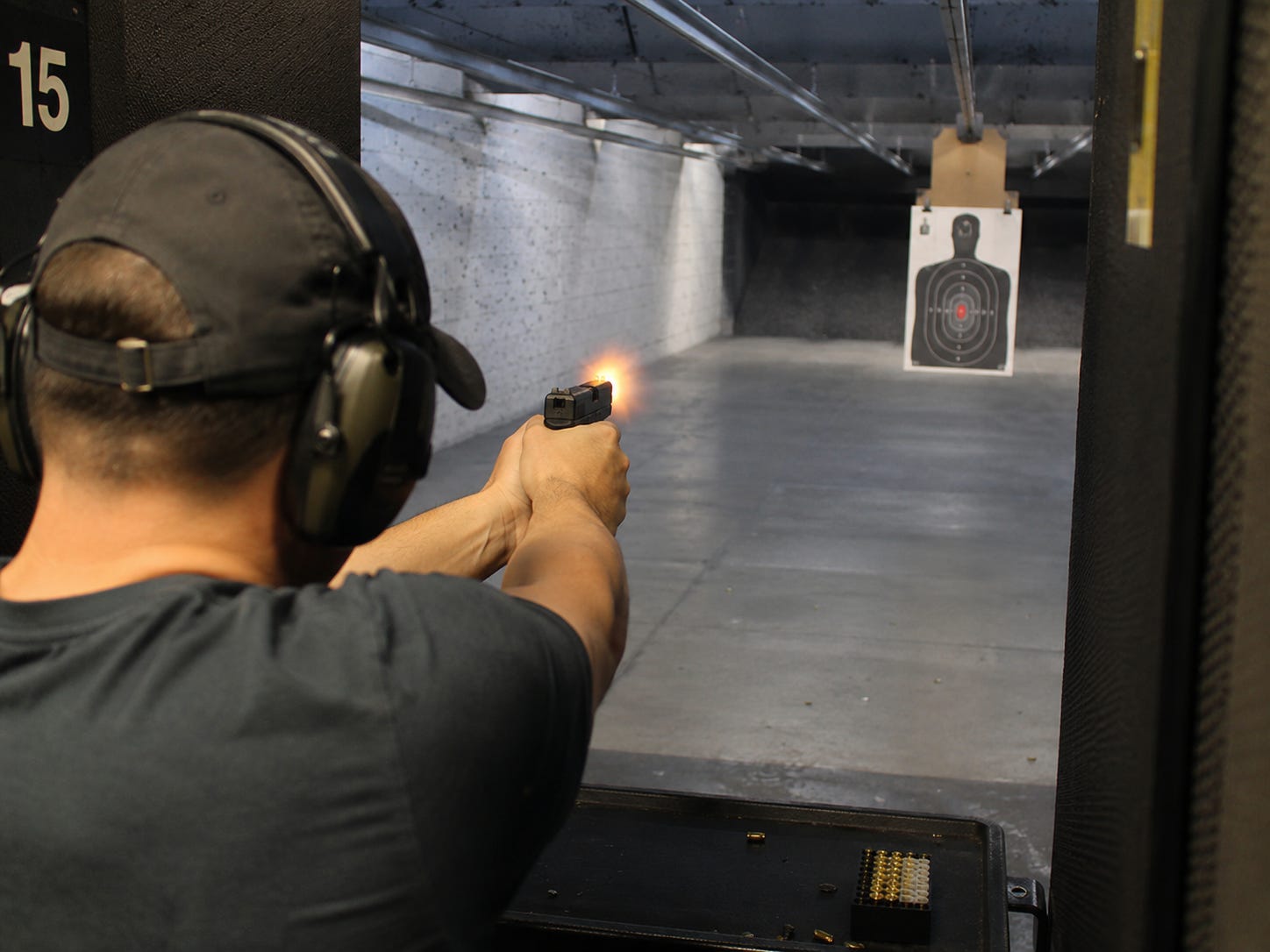
Despite living in the UK, I’ve had the opportunity to shoot a variety of firearms, including a pistol, rifles, and shotguns. One of the most important lessons drummed into every person learning to handle guns is that you treat every weapon as loaded. This includes not pointing it at someone unless you intend to shoot them and keeping your finger OFF the trigger until you are ready to fire.
And lest anyone think only beginners make such mistakes – my great grandfather, Maurice Blood, was a match rifle enthusiast and represented the UK in the 1908 Olympics. One of his prized possessions was a glass phial containing the pieces of clothing punched through by a round when he accidentally shot himself while cleaning his rifle.
Why do we handle such firearms with care? Because the price of mistakes is frequently injury or even death.
So, what’s that to do with men? The comparison is not that men are weapons, but that both situations involve precautions taken under uncertainty when the consequences of misplaced trust may be severe. Just as we learn to treat a gun as potentially loaded, many women have learned to treat men with caution until their behaviour, the circumstances and the passage of time give them reasonable grounds to feel safer.
And why is that? It’s because they have learned from their own experience, and the experiences of other women, that sometimes men can be deadly, and that women frequently have no way of assessing that danger beforehand.
A great many women experience sexual harassment, threatening behaviour, sexual violence or abuse, often beginning in adolescence. According to the World Health Organization (WHO), roughly 1 in 3 women worldwide experience physical or sexual violence in their lifetimes, which drastically elevates risks for chronic physical injury, mental health disorders, homicide, and suicide attempts1.
Additionally, a U.S. study published by the National Institutes of Health (NIH) found homicide to be a leading cause of injury-related death among pregnant and postpartum women. Other research has found that these killings frequently occur in the home and are often perpetrated by a current or former intimate partner2.
So it is that many women learn to fawn and placate when approached by strange men because they are fearful of the possible negative reaction prompted by rejection. To quote Margaret Atwood, “Men are afraid that women will laugh at them. Women are afraid that men will kill them.”
And that risk isn’t just because they can’t be sure how a man will act – it’s because the average man is bigger and stronger than the average woman – increasing the fear generated by threatening behaviour as well as the risk of significant physical harm if violence occurs.
Additionally, large sections of society still prefer to blame the victim rather than hold the assailant to account. A woman will be challenged over her clothing, for being out alone, for drinking, for not “being nice”, for being “too nice”, while courts hand down lenient sentences to men because of the possible impact on that man’s future.
Responsible gun owners do not merely say, “Trust me.” They demonstrate safety through behaviour, such as:
keeping the weapon pointed away;
keeping their finger off the trigger;
respecting the range officer;
accepting checks without indignation;
never making another person responsible for guessing whether the weapon is safe.
The male equivalent is not simply declaring oneself harmless. It is respecting boundaries, accepting rejection, avoiding coercive behaviour, noticing how one’s physical presence may be experienced, and not treating caution as a personal affront.
I wouldn’t expect a responsible gun owner to criticise another person for maintaining safe distance, asking for the weapon to be checked, or refusing to rely solely on reassurance. And as a man, I fully support the right of women to treat any man around them – especially a stranger or someone acting inappropriately – as potentially dangerous until his conduct gives them reasonable grounds to feel safe in his company. Her safety outweighs my feelings. Every. Single. Time.
1 https://www.who.int/news-room/fact-sheets/detail/violence-against-women