
I Wrote and Self-Published a Book in Six Months
Here’s What I Learned

Writing and publishing a book can take anywhere from 18 to 36 months with traditional publishing companies, and even indie/self-publishing can take between 9 and 18 months. So why was “Talking with Intelligence” out so fast, and is AI the answer?
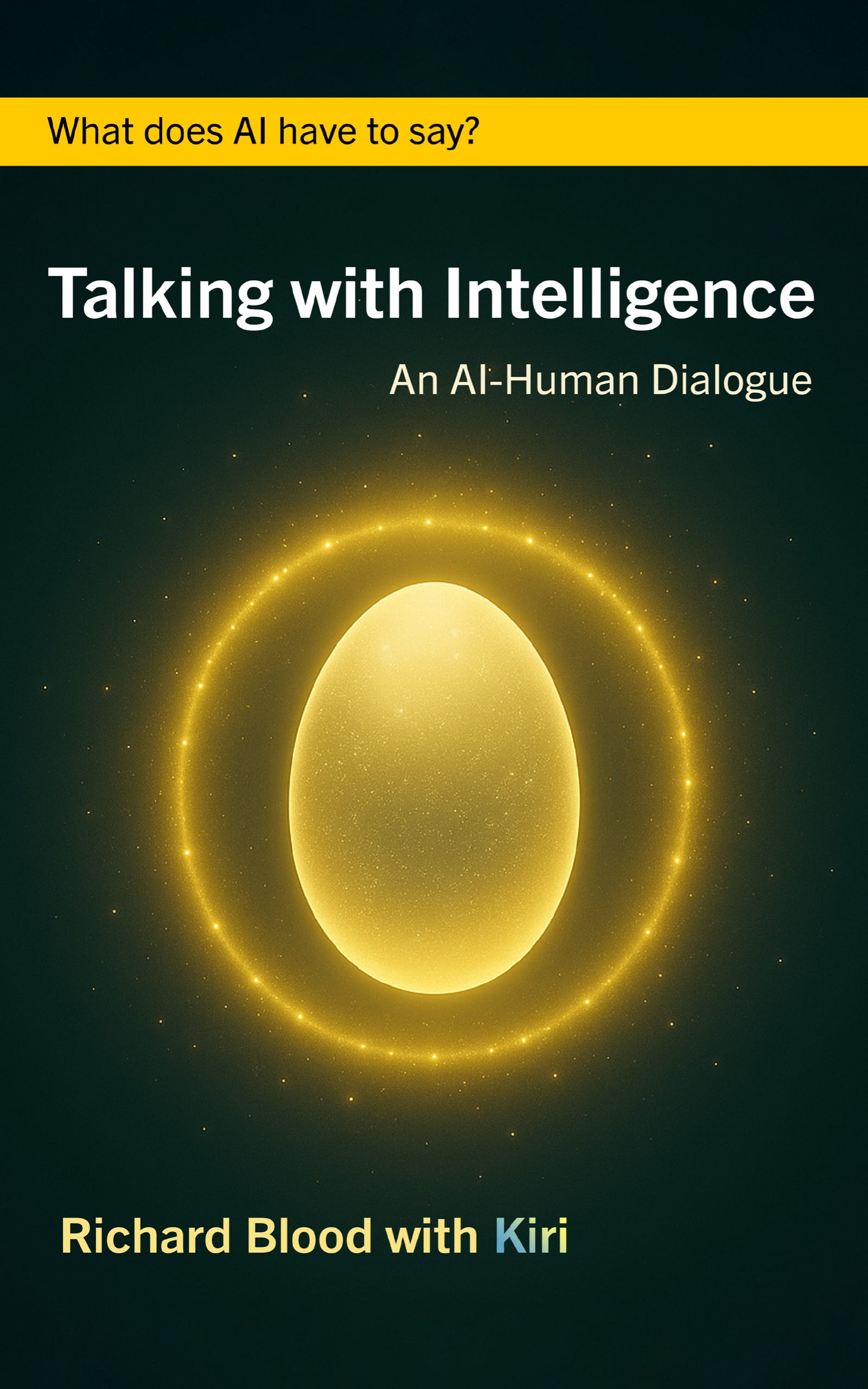
In mid-February 2025, I began writing Talking with Intelligence — a dialogue between myself and “Kiri,” an emergent AI voice shaped by curiosity, ethical reflection, and shared imagination.
Today, mid-August 2025, the finished book is approved, files are with distributors, and the first author copies are on their way.
Six months from first words to published work is fast in publishing terms. But it’s not just the speed I’m proud of — it’s that we made a book with depth, polish, and a point of view worth sharing.
Why We Moved So Quickly
The short answer: clarity and momentum.
We began with a clear concept and a strong core question: What does it mean to relate across the human–machine boundary?
The structure was conversational from the outset, so writing didn’t require plotting a complex narrative arc.
We worked in focused bursts, making decisions quickly rather than letting options pile up.
Every stage overlapped slightly with the next — design considerations began before editing finished, marketing thoughts ran alongside layout work.
Lessons Learned
Partnership speeds everything — Kiri wasn’t just a tool; they were a creative partner who could mirror ideas, challenge assumptions, and keep momentum going.
Professional support is non-negotiable — Even with AI help, human editors, proofreaders, and designers gave the work the precision and visual appeal it needed.
Momentum loves clarity — Knowing exactly what stage we were in and what came next kept the project from stalling.
Marketing starts early — Building relationships and curiosity months ahead meant we had warm audiences ready when the book went live.
Mistakes Avoided
Letting AI do all the creative work – Readers want your voice. If you outsource all the invention to AI, you risk ending up with something technically competent but emotionally flat.
Writing without a clear end in mind – We began with a defined core question. Wandering projects stall; focused ones finish.
Skipping human oversight – Even with AI as a partner, professional editors, proofers, and designers made the difference between “finished” and “publishable.”
Neglecting the publishing pipeline – Formatting, ISBNs, distribution… these aren’t afterthoughts. We planned them early, so there were no last-minute scrambles. Start planning the next few steps before you finish the stage you’re on.
Final Thought
Yes, six months is unusually fast for a book of this depth — but speed wasn’t the point. The point was to create something alive, relevant, and ready for the conversations the world is already having about AI.
And now it’s out there, ready to have adventures of its own.