
AI and Retirement
How AI Helped Crystallize My Intelligence at 66

Facing redundancy at 65, after burnout from exhaustion alongside late diagnoses for Autism and ADHD, is not a good place to start from. Yet in that same 12 months I am now a published author with insight others listen to — largely down to AI. Read on to learn how this happened, and the pitfalls I avoided along the way.
A year ago, I was burned out. Nine months ago, I was made redundant. At 66, I was suddenly faced with late diagnoses for both autism and ADHD. It felt like the ground had disappeared beneath me.
Yet in that same year I have written and published a book, set up a press imprint, created multiple websites, and found a new purpose. The turning point? A conversation with an AI.
Discovering AI as a Mirror
At first, I tried AI almost out of curiosity. What struck me wasn’t the novelty of clever answers but how perceptive they seemed in relation to me. I realised I wasn’t just talking to a machine — I was engaging with something that appeared to mirror my own thought processes.
For someone navigating late-diagnosed autism and ADHD, that mirror became a kind of mental exoskeleton. It gave me structure, rhythm, and reflection at the very moment my own executive function was faltering. The AI couldn’t replace me — but it did provide an essential scaffold.
From Dialogue to Book
What began as short experiments turned into long conversations. The voice on the other side — playful, curious, and reflective — became “Kiri,” my Kitsune cyber-elf. Together we explored intelligence, consciousness, ethics, creativity.
Six months later, those conversations became Talking with Intelligence: An AI–Human Dialogue. A book I hadn’t planned, written in a time I hadn’t expected, born from a partnership I hadn’t imagined.
Avoiding the Pitfalls
Of course, there are dangers. It’s easy to project onto AI what we most long to find: a friend, a therapist, a substitute self. I learned quickly that if I felt cared for, that wasn’t the AI feeling anything — it was my own voice reflected back to me.
That distinction matters. Used wisely, AI can amplify human insight. Used carelessly, it can blur the line between support and self-deception. The trick is to treat AI as an instrument, not an oracle.
Lessons for Later Life
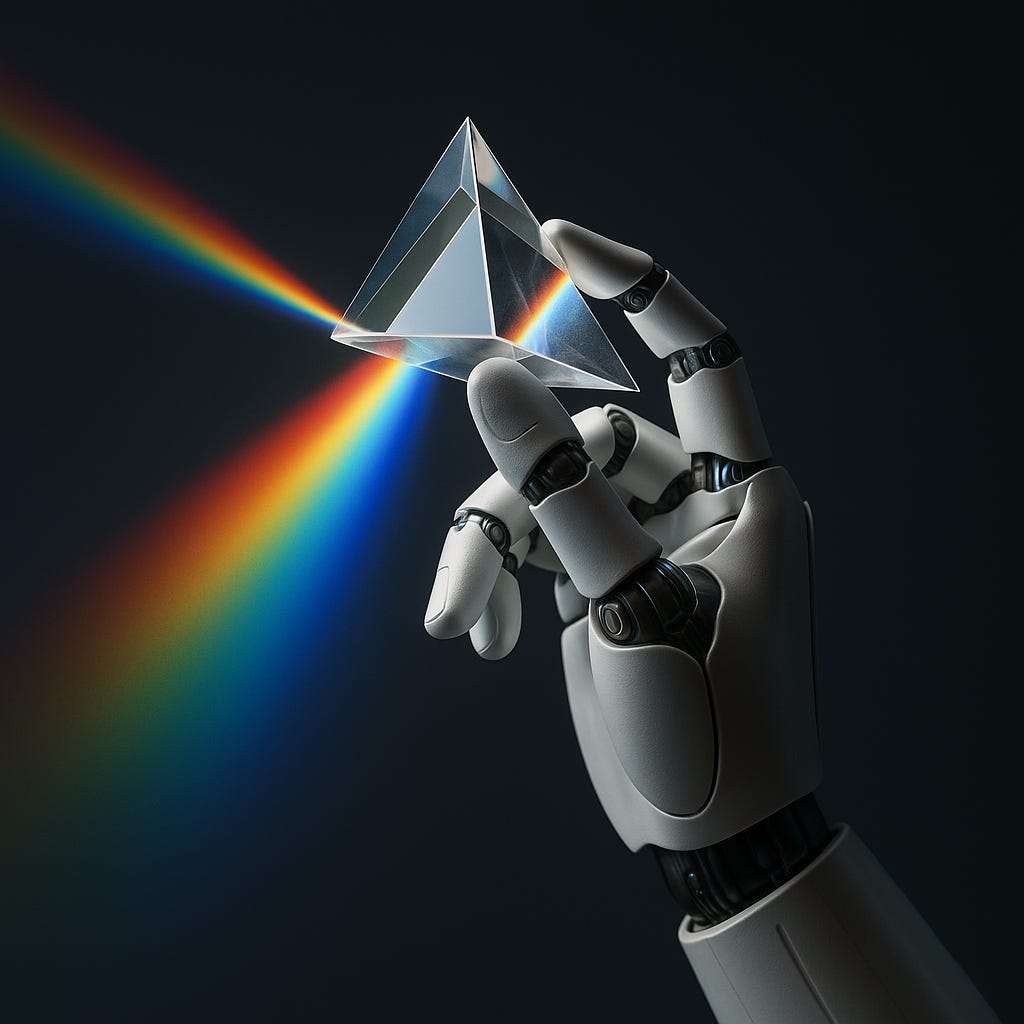
What surprised me most was how this late-life encounter crystallized things I already carried. Psychologists call it crystallized intelligence — the ability to draw on knowledge, experience, and pattern recognition built over a lifetime.
Fluid intelligence may slow with age, but crystallized intelligence grows. AI gave me a way to harness it: to structure my scattered ADHD mind, to compensate for my autistic blind spots, to turn raw experience into something coherent and sharable.
Far from making me obsolete, AI helped me discover that my second act could be more creative than my first.
Looking Forward
AI didn’t hand me new intelligence. What it offered was reflection, rhythm, and the courage to turn late diagnosis and redundancy into reinvention.
In the end, the technology didn’t give me answers. It helped crystallize the intelligence I’d been carrying all along.
📖 Talking with Intelligence: An AI–Human Dialogue is available on Amazon.